Mining & Logging Employees in West Virginia
Overview
Mining and logging remain central components of West Virginia’s economy, especially in regions historically tied to coal extraction, natural resource development, and timber production. Employment in this sector reflects broader economic forces, including energy demand, commodity prices, environmental regulation, and technological change.
This page uses official labor market data from the U.S. Bureau of Labor Statistics, accessed through the Federal Reserve Bank of St. Louis (FRED), to provide a clear, data‑driven view of employment trends in West Virginia’s mining and logging industries.
Key Insights
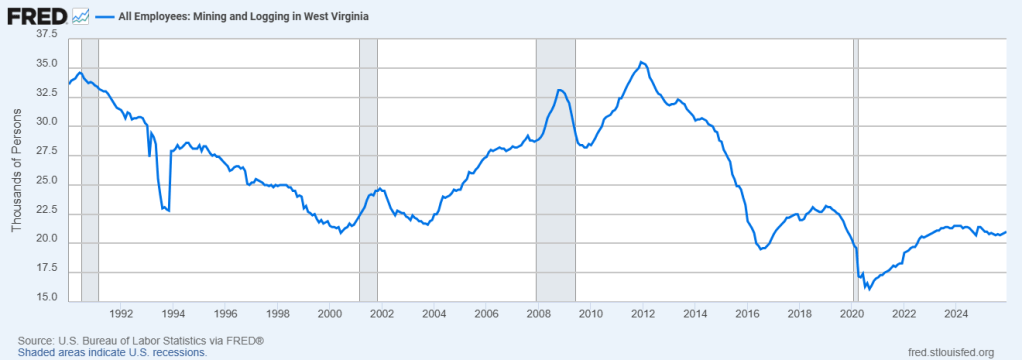
- As of December 2025, West Virginia’s mining and logging employment stands at 21.0 thousand workers.
- Employment has fluctuated significantly over the past three decades, with peaks above 30,000 workers and lows near 16,000 during downturns.
- The sector is heavily influenced by:
- Coal market conditions
- Natural gas development
- Logging demand
- Environmental and regulatory shifts
- Technological improvements reducing labor needs
- Despite long‑term declines, mining and logging remain major employers in several counties, supporting local economies and related industries.
Why This Indicator Matters
Mining and logging employment is a key measure of:
- Regional economic health in resource‑dependent communities
- Energy sector transitions, especially coal vs. natural gas
- Labor market resilience in extractive industries
- Policy impacts on traditional energy and natural resource sectors
Tracking this data helps illustrate how West Virginia’s economy evolves as national energy priorities shift.
 commonwealthmining.com