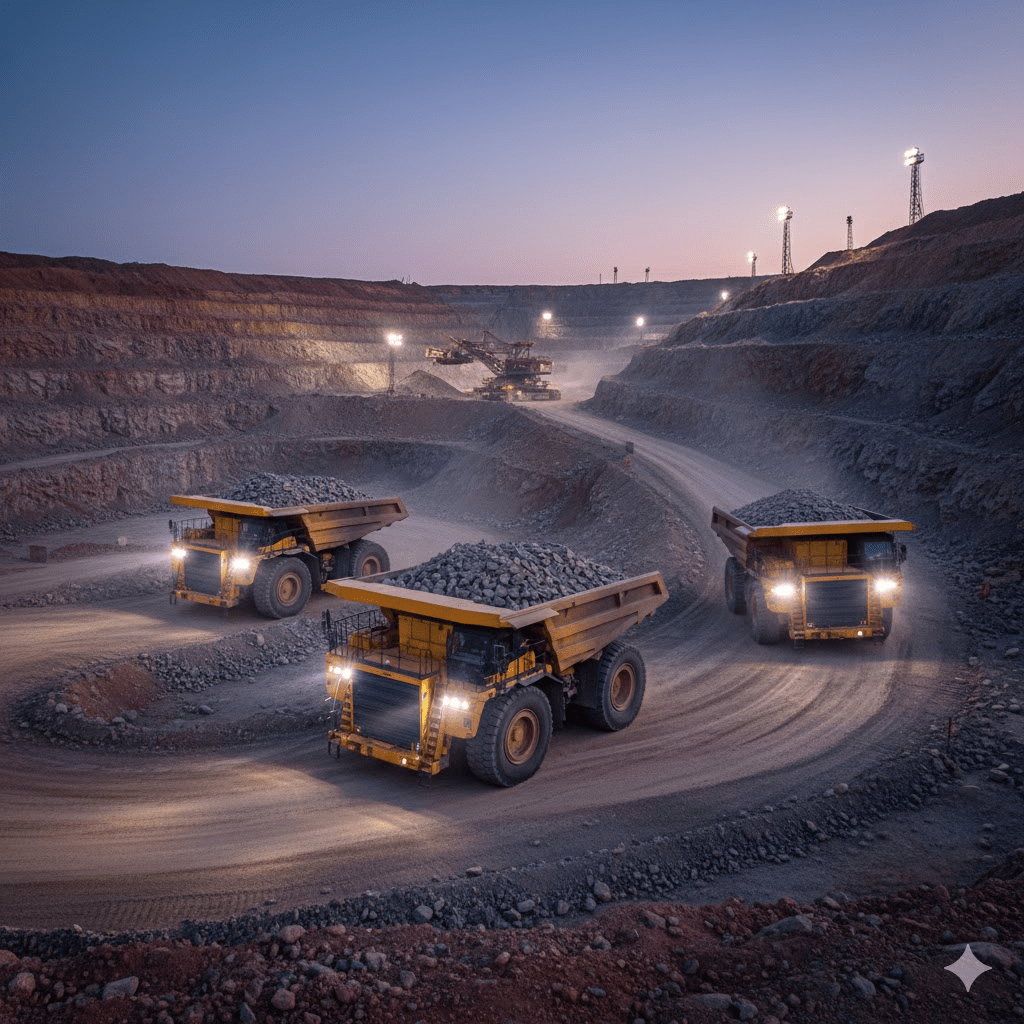
Haul Trucks
Haul trucks are the giants of modern mining. These massive, heavy‑duty vehicles transport enormous volumes of rock, ore, and overburden from the mine face to processing plants, waste dumps, or stockpiles. Their size, power, and efficiency make them essential to large‑scale surface mining operations around the world.
What Are Haul Trucks?
Haul trucks are off‑highway, ultra‑large vehicles engineered to:
- Carry hundreds of tons of material per load
- Operate continuously in harsh mining environments
- Navigate steep grades and long haul routes
- Deliver maximum productivity with minimal downtime
They are among the largest machines ever built by humans.
Major Types of Haul Trucks
1. Rigid‑Frame Trucks
The most common type in mining.
Features:
- Solid, non‑articulated frame
- Enormous payload capacity
- High stability on well‑maintained haul roads
Used in:
- Copper mines
- Iron ore mines
- Coal operations
- Gold and diamond mines
2. Articulated Trucks
Smaller, flexible trucks with a pivot joint.
Advantages:
- Excellent maneuverability
- Better performance on rough or uneven terrain
Used for:
- Construction
- Small mining operations
- Support tasks
3. Ultra‑Class Trucks
The largest category of haul trucks.
Payload range: 300–450+ tons
Examples:
- Caterpillar 797F
- Komatsu 980E
- BelAZ 75710 (world’s largest)
These trucks move massive volumes of material with each cycle.
How Haul Trucks Support Mining
1. Ore Transport
Move blasted ore from the pit to crushers or processing plants.
2. Overburden Removal
Transport waste rock to dumps or backfill areas.
3. Stockpile Management
Deliver material to designated storage areas.
4. Continuous Production
Operate 24/7 in multi‑shift cycles to maximize output.
Key Performance Factors
- Payload capacity — determines productivity per trip
- Engine power — often exceeding 3,000 horsepower
- Fuel efficiency — major cost factor in mining
- Tire durability — giant tires can cost tens of thousands each
- Cycle time — loading, hauling, dumping, returning
- Automation — many mines now use autonomous haul fleets
Modern haul trucks often include GPS, collision‑avoidance systems, and real‑time monitoring.
Safety Considerations
- Blind‑spot hazards
- Steep grades and braking control
- Tire blowouts
- Safe loading practices
- Road maintenance to prevent rollovers
Strict protocols and operator training are essential due to the size and weight of these machines.
Conclusion
Haul trucks are the workhorses of surface mining, moving massive quantities of material with every load. Their size, power, and advanced technology make them indispensable to efficient, large‑scale mineral extraction. Understanding haul trucks provides insight into the logistical backbone of modern mining operations.
 commonwealthmining.com