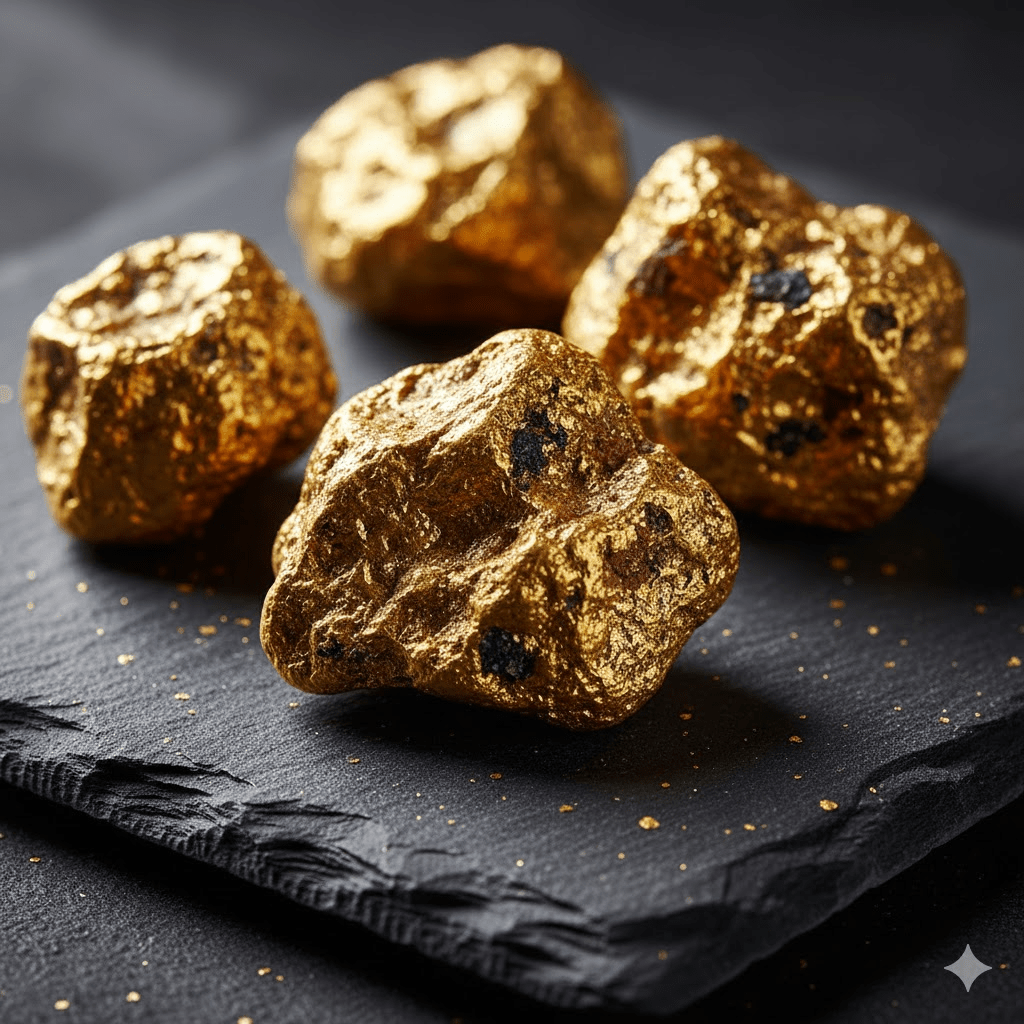
GOLD
Gold is one of the most valuable and widely recognized metals in human history. Its unique properties, rarity, and cultural significance have made it a cornerstone of global trade, jewelry, investment, and industrial applications. From ancient civilizations to modern mining operations, gold remains one of the most sought‑after minerals on Earth.
What Is Gold?
Gold is a naturally occurring metallic element known for its:
- Bright yellow color
- High density
- Resistance to corrosion
- Excellent conductivity
- Malleability and ductility
These properties make gold ideal for both decorative and industrial uses.
Gold is typically found in:
- Hard‑rock deposits (veins and lodes)
- Placer deposits (riverbeds and alluvial sediments)
How Gold Forms
Gold deposits form through geological processes such as:
1. Hydrothermal Activity
Hot, mineral‑rich fluids move through cracks in the Earth’s crust, depositing gold in veins.
2. Magmatic Processes
Gold can crystallize from molten rock deep underground.
3. Weathering and Erosion
Gold from hard‑rock deposits breaks down and accumulates in riverbeds, forming placer deposits.
How Gold Is Mined
1. Open‑Pit Mining
Used for large, low‑grade deposits near the surface. Massive equipment removes rock to expose gold‑bearing ore.
2. Underground Mining
Used for deep, high‑grade veins. Miners access ore through tunnels and shafts.
3. Placer Mining
Extracts gold from riverbeds and sediments using:
- Pans
- Sluice boxes
- Dredges
- Highbankers
This method relies on gold’s high density.
Gold Processing Methods
1. Crushing and Grinding
Ore is crushed into fine particles to release gold.
2. Gravity Separation
Uses water and gravity to separate heavy gold from lighter material.
3. Flotation
Chemicals attach to gold particles, allowing them to float and be collected.
4. Cyanide Leaching
A solution dissolves gold from crushed ore. This is the most common method for large‑scale operations.
5. Smelting and Refining
Gold is melted and purified to produce high‑purity bars or ingots.
Uses of Gold
1. Jewelry
The largest consumer of gold worldwide. Gold’s beauty and resistance to tarnish make it ideal for ornaments.
2. Investment
Gold bars, coins, and ETFs are used as a store of value and hedge against inflation.
3. Electronics
Gold’s conductivity and corrosion resistance make it essential for:
- Circuit boards
- Connectors
- Smartphones
- High‑precision electronics
4. Dentistry and Medicine
Used in dental alloys and medical devices due to its biocompatibility.
5. Aerospace
Gold coatings protect spacecraft components from radiation and heat.
Major Gold‑Producing Regions
Gold is mined worldwide, with major producers including:
- China
- Australia
- Russia
- United States
- Canada
- South Africa
These regions host large, economically significant gold deposits.
Environmental Considerations
Gold mining requires careful management of:
- Waste rock
- Tailings
- Water use
- Cyanide handling
- Land restoration
Modern regulations ensure responsible extraction and reclamation.
Conclusion
Gold remains one of the most important and valuable minerals on Earth. Its unique properties, global demand, and long history make it central to mining, technology, and finance. Understanding how gold forms, where it is found, and how it is mined provides insight into one of the world’s most iconic and enduring resources.
 commonwealthmining.com